Buy ykh.eu ?
We are moving the project
ykh.eu .
Are you interested in purchasing the domain
ykh.eu ?
domain@kv-gmbh.de · 0541-91531010
Buy ykh.eu ?
What is task 2351 in physics?
Task 2351 in physics typically involves solving problems related to mechanics, such as calculating forces, velocities, accelerations, or energies in various scenarios. It may require applying principles of Newtonian mechanics, such as Newton's laws of motion or the conservation of energy. Students may need to use mathematical equations and formulas to analyze and solve the given problems. Overall, task 2351 aims to test students' understanding and application of fundamental concepts in physics. **
What is task 2351 in Physics?
Task 2351 in Physics involves calculating the electric field due to a point charge. This task typically requires applying the formula for electric field strength, which is given by E = k * Q / r^2, where E is the electric field strength, k is Coulomb's constant, Q is the charge of the point charge, and r is the distance from the point charge. Students may be asked to determine the direction and magnitude of the electric field at various distances from the point charge. **


Similar search terms for KAWE-2351-Clutch-plate
Top-Angebote
Products related to KAWE-2351-Clutch-plate:



-
Why is clutch wear lowest in the lowest gear?
Clutch wear is lowest in the lowest gear because the engine speed is closest to the vehicle speed in this gear. This means there is less slipping required to match the engine speed with the transmission speed, resulting in less wear on the clutch. Additionally, the torque multiplication in the lower gear reduces the load on the clutch, further decreasing wear. Overall, the lower gear allows for smoother engagement and disengagement of the clutch, minimizing wear and tear on the clutch components. **
-
In what order do I use the gear and clutch?
To properly use the gear and clutch in a manual transmission vehicle, you should first press the clutch pedal all the way down to disengage the engine from the transmission. Then, shift the gear lever to the desired gear (1st gear for starting from a stop, for example). Once the gear is selected, slowly release the clutch pedal while gently pressing the gas pedal to smoothly engage the engine with the transmission. Remember to always use the clutch when shifting gears to prevent damage to the transmission. **
-
Does it harm the clutch to start in second gear?
Starting in second gear can put extra strain on the clutch as it requires more power to get the vehicle moving. This can lead to premature wear and potential damage to the clutch over time. It is generally recommended to start in first gear to reduce strain on the clutch and ensure smooth operation of the vehicle. **
-
Why is clutch wear the lowest in the lowest gear?
Clutch wear is lowest in the lowest gear because the engine is rotating at a slower speed, which means there is less friction and less wear on the clutch. In the lowest gear, the engine has more mechanical advantage, so it doesn't have to work as hard to move the vehicle, resulting in less strain on the clutch. Additionally, the lower gear allows for smoother and more gradual acceleration, reducing the need for frequent clutch engagement and disengagement, further minimizing wear on the clutch. **


Does it damage the clutch to start in second gear?
Starting in second gear can put extra strain on the clutch and transmission, as it requires more power to get the vehicle moving. This can cause premature wear and damage to the clutch over time. Additionally, starting in second gear can also put stress on the engine and drivetrain. It is generally recommended to start in first gear to minimize wear and tear on the clutch and other components. **
How is the first gear engaged without using the clutch?
To engage the first gear without using the clutch, the vehicle needs to be at a complete stop. Then, the driver can shift the gear lever into first gear while gently applying pressure on the gas pedal. As the vehicle starts to move forward, the transmission will engage the first gear without the need for the clutch. This technique is known as "rev-matching" and requires precise timing and coordination to avoid damaging the transmission. It should be used sparingly and only in emergency situations. **
Top-Angebote
Products related to KAWE-2351-Clutch-plate:
-
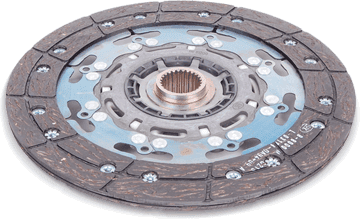
KAWE 2351 Clutch plateDiameter: 280; Number of Teeth: 10; Hub Profile: 35mm; Parameter: 280 VLO; Vehicle Identification Number (VIN) from: 346883, 4282708, 4367142; Engine Code: OM364; Vehicle Identification Number (VIN) to: 4282707, 4276890; Engine Number from: 393781; Engine Number to: 040605; Vehicle type: 318.07261,49 £*Shipping: 8,45 £Secure redirect to the provider
-
What is task 2351 in physics?
Task 2351 in physics typically involves solving problems related to mechanics, such as calculating forces, velocities, accelerations, or energies in various scenarios. It may require applying principles of Newtonian mechanics, such as Newton's laws of motion or the conservation of energy. Students may need to use mathematical equations and formulas to analyze and solve the given problems. Overall, task 2351 aims to test students' understanding and application of fundamental concepts in physics. **
-
What is task 2351 in Physics?
Task 2351 in Physics involves calculating the electric field due to a point charge. This task typically requires applying the formula for electric field strength, which is given by E = k * Q / r^2, where E is the electric field strength, k is Coulomb's constant, Q is the charge of the point charge, and r is the distance from the point charge. Students may be asked to determine the direction and magnitude of the electric field at various distances from the point charge. **
-
Why is clutch wear lowest in the lowest gear?
Clutch wear is lowest in the lowest gear because the engine speed is closest to the vehicle speed in this gear. This means there is less slipping required to match the engine speed with the transmission speed, resulting in less wear on the clutch. Additionally, the torque multiplication in the lower gear reduces the load on the clutch, further decreasing wear. Overall, the lower gear allows for smoother engagement and disengagement of the clutch, minimizing wear and tear on the clutch components. **
-
In what order do I use the gear and clutch?
To properly use the gear and clutch in a manual transmission vehicle, you should first press the clutch pedal all the way down to disengage the engine from the transmission. Then, shift the gear lever to the desired gear (1st gear for starting from a stop, for example). Once the gear is selected, slowly release the clutch pedal while gently pressing the gas pedal to smoothly engage the engine with the transmission. Remember to always use the clutch when shifting gears to prevent damage to the transmission. **
Similar search terms for KAWE-2351-Clutch-plate
-
Does it harm the clutch to start in second gear?
Starting in second gear can put extra strain on the clutch as it requires more power to get the vehicle moving. This can lead to premature wear and potential damage to the clutch over time. It is generally recommended to start in first gear to reduce strain on the clutch and ensure smooth operation of the vehicle. **
-
Why is clutch wear the lowest in the lowest gear?
Clutch wear is lowest in the lowest gear because the engine is rotating at a slower speed, which means there is less friction and less wear on the clutch. In the lowest gear, the engine has more mechanical advantage, so it doesn't have to work as hard to move the vehicle, resulting in less strain on the clutch. Additionally, the lower gear allows for smoother and more gradual acceleration, reducing the need for frequent clutch engagement and disengagement, further minimizing wear on the clutch. **
-
Does it damage the clutch to start in second gear?
Starting in second gear can put extra strain on the clutch and transmission, as it requires more power to get the vehicle moving. This can cause premature wear and damage to the clutch over time. Additionally, starting in second gear can also put stress on the engine and drivetrain. It is generally recommended to start in first gear to minimize wear and tear on the clutch and other components. **
-
How is the first gear engaged without using the clutch?
To engage the first gear without using the clutch, the vehicle needs to be at a complete stop. Then, the driver can shift the gear lever into first gear while gently applying pressure on the gas pedal. As the vehicle starts to move forward, the transmission will engage the first gear without the need for the clutch. This technique is known as "rev-matching" and requires precise timing and coordination to avoid damaging the transmission. It should be used sparingly and only in emergency situations. **
* All prices are inclusive of VAT and, if applicable, plus shipping costs. The offer information is based on the details provided by the respective shop and is updated through automated processes. Real-time updates do not occur, so deviations can occur in individual cases. ** Note: Parts of this content were created by AI.