Buy ykh.eu ?
We are moving the project
ykh.eu .
Are you interested in purchasing the domain
ykh.eu ?
domain@kv-gmbh.de · 0541-91531010
Buy ykh.eu ?
What is a glycosidic bond?
A glycosidic bond is a type of covalent bond that joins a carbohydrate molecule to another group, which can be another carbohydrate or a non-carbohydrate molecule. It is formed through a condensation reaction between the hydroxyl group of one molecule and the anomeric carbon of another molecule, resulting in the loss of a water molecule. Glycosidic bonds are important in the structure of carbohydrates, such as in forming disaccharides like sucrose or polysaccharides like starch. **
What is the glycosidic bond in sucrose?
The glycosidic bond in sucrose is a type of covalent bond that links the glucose and fructose molecules together. It is a specific type of linkage known as an alpha-1,2-glycosidic bond, which forms between the carbon-1 atom of glucose and the carbon-2 atom of fructose. This bond is responsible for the formation of the disaccharide sucrose, which is commonly known as table sugar. **


Similar search terms for Glycosidic
Top-Angebote
Products related to Glycosidic:
-
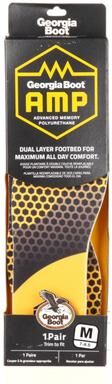
Georgia Boot AMP Memory Foam Footbed - XXL Yellow Footwear Accessories*The Georgia Boot AMP Memory Foam Footbed adjusts for customized cushioning of your entire foot. Heel cup provides support and comfort. Airflow channels provide cool circulation. Polyurethane layer for maximum cushioning. Footbed can be trimmed. M...30,00 $*Shipping: 6,95 $Secure redirect to the provider
-
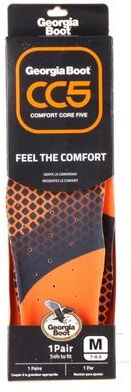
Georgia Boot Comfort Core 5 Orthotic Footbed - L Orange Footwear Accessories*Ergonomic Arch Support in the Georgia Boot Comfort Core 5 Footbed relieves foot fatigue and provides added comfort. Air flow channels provide cool circulation. Footbed can be trimmed. M fits U.S. Men's sizes 6 to 8-1/2 and Women's sizes 8 to...28,00 $*Shipping: 6,95 $Secure redirect to the provider
-
StayWell Portable Inflatable Pillow, Camping Equipment, Folding Compressible Air Cushion, Outdoor Protective Sleeping Gear Portable Inflatable Pillow, Camping Equipment, Folding Compressible Air Cushion, Outdoor Protective Sleeping GearUpgrade your outdoor adventures with the Portable Inflatable Pillow, a musthave addition to your camping equipment and travel essentials. Designed with comfort, portability, and durability in mind, this compact pillow ensures restful sleep wherever...21,97 $*Shipping: 0,00 $Secure redirect to the provider
-
Inspire Daily Merch Fish Tank Cartoon Magic Jewelry, Cake Decoration, Aquarium Accessories, Fish Farming Supplies Fish Tank Cartoon Magic Jewelry, Cake Decoration, Aquarium Accessories, Fish Farming SuppliesTransform Your Fish Tank with Cartoon Magic Decorations Add a touch of whimsy to your fish tank with this Cartoon Magic Jewelry. This Fish Tank Decoration features a suspended design that creates a unique visual effect in your aquarium, making it a...32,97 $*Shipping: 0,00 $Secure redirect to the provider


-
What is a glycosidic bond in sucrose?
A glycosidic bond in sucrose is a type of covalent bond that links the glucose and fructose molecules together. It is formed through a condensation reaction, where a molecule of water is removed to join the two sugar molecules. This bond is important for the structure and function of sucrose, as it holds the two sugar molecules together and allows for the storage and transport of energy in plants. **
-
How to draw trehalose in a 2-11 glycosidic linkage?
To draw trehalose in a 2-11 glycosidic linkage, start by drawing two glucose molecules. Connect the first glucose molecule's carbon 2 to the second glucose molecule's carbon 1 with a glycosidic bond. This linkage represents the 2-1 glycosidic bond. Next, add another glucose molecule and connect its carbon 1 to the second glucose molecule's carbon 1 with a glycosidic bond. This linkage represents the 1-1 glycosidic bond. This structure represents trehalose in a 2-1,1 glycosidic linkage. **
-
Why is there a beta-1,4-glycosidic bond in lactose?
The beta-1,4-glycosidic bond in lactose is formed between the glucose and galactose molecules. This bond is important because it determines the structure and properties of lactose. The beta configuration of the glycosidic bond in lactose allows for the formation of a specific three-dimensional structure that is essential for its function as a disaccharide sugar found in milk. This bond also influences the way lactose is digested by the enzyme lactase in the human body. **
-
How do you draw trehalose in a 2-11 glycosidic bond?
To draw trehalose in a 2-11 glycosidic bond, you would first draw two glucose molecules connected by an alpha-1,1 glycosidic bond. Then, you would add another glucose molecule to the first glucose molecule in the 2 position, forming a 1,2 glycosidic bond. Finally, you would add the last glucose molecule to the second glucose molecule in the 1 position, forming a 2,1 glycosidic bond. This structure represents trehalose in a 2-11 glycosidic bond. **


How do you draw trehalose in a 2-11 glycosidic linkage?
To draw trehalose in a 2-11 glycosidic linkage, start by drawing two glucose molecules connected by an alpha-1,1 glycosidic bond. Then, draw another glucose molecule connected to the first glucose molecule in the pair by an alpha-1,2 glycosidic bond. This creates the 2-11 glycosidic linkage in trehalose. The resulting structure should show three glucose molecules connected in a linear fashion with the 2-11 glycosidic linkage between the first and third glucose molecules. **
What are the differences between an ester bond and glycosidic formation?
An ester bond is formed when a carboxyl group of one molecule reacts with a hydroxyl group of another molecule, resulting in the formation of an ester and the release of water. This type of bond is commonly found in lipids and is important for energy storage. On the other hand, glycosidic formation involves the bonding of a sugar molecule to another molecule, typically another sugar or an alcohol, through the reaction between the anomeric carbon of the sugar and a hydroxyl group of the other molecule. This type of bond is important for the formation of carbohydrates and is commonly found in polysaccharides such as starch and cellulose. **
Top-Angebote
Products related to Glycosidic:
-
Shoekeeper Men's Shoe Stretcher & Spray - L Other Footwear Accessories*Expand your shoes to the perfect fit. Shoe stretch spray softens leather. Screw-driven shoe stretcher expands leather to eliminate pinching. Metal plugs included for spot stretching. Kit includes one stretcher and one bottle of 4 oz. spray. Sizes:....43,96 $*Shipping: 6,95 $Secure redirect to the provider
-
Georgia Boot AMP Memory Foam Footbed - XXL Yellow Footwear Accessories*The Georgia Boot AMP Memory Foam Footbed adjusts for customized cushioning of your entire foot. Heel cup provides support and comfort. Airflow channels provide cool circulation. Polyurethane layer for maximum cushioning. Footbed can be trimmed. M...30,00 $*Shipping: 6,95 $Secure redirect to the provider
-
Georgia Boot Comfort Core 5 Orthotic Footbed - L Orange Footwear Accessories*Ergonomic Arch Support in the Georgia Boot Comfort Core 5 Footbed relieves foot fatigue and provides added comfort. Air flow channels provide cool circulation. Footbed can be trimmed. M fits U.S. Men's sizes 6 to 8-1/2 and Women's sizes 8 to...28,00 $*Shipping: 6,95 $Secure redirect to the provider
-
What is a glycosidic bond?
A glycosidic bond is a type of covalent bond that joins a carbohydrate molecule to another group, which can be another carbohydrate or a non-carbohydrate molecule. It is formed through a condensation reaction between the hydroxyl group of one molecule and the anomeric carbon of another molecule, resulting in the loss of a water molecule. Glycosidic bonds are important in the structure of carbohydrates, such as in forming disaccharides like sucrose or polysaccharides like starch. **
-
What is the glycosidic bond in sucrose?
The glycosidic bond in sucrose is a type of covalent bond that links the glucose and fructose molecules together. It is a specific type of linkage known as an alpha-1,2-glycosidic bond, which forms between the carbon-1 atom of glucose and the carbon-2 atom of fructose. This bond is responsible for the formation of the disaccharide sucrose, which is commonly known as table sugar. **
-
What is a glycosidic bond in sucrose?
A glycosidic bond in sucrose is a type of covalent bond that links the glucose and fructose molecules together. It is formed through a condensation reaction, where a molecule of water is removed to join the two sugar molecules. This bond is important for the structure and function of sucrose, as it holds the two sugar molecules together and allows for the storage and transport of energy in plants. **
-
How to draw trehalose in a 2-11 glycosidic linkage?
To draw trehalose in a 2-11 glycosidic linkage, start by drawing two glucose molecules. Connect the first glucose molecule's carbon 2 to the second glucose molecule's carbon 1 with a glycosidic bond. This linkage represents the 2-1 glycosidic bond. Next, add another glucose molecule and connect its carbon 1 to the second glucose molecule's carbon 1 with a glycosidic bond. This linkage represents the 1-1 glycosidic bond. This structure represents trehalose in a 2-1,1 glycosidic linkage. **
Similar search terms for Glycosidic
-
StayWell Portable Inflatable Pillow, Camping Equipment, Folding Compressible Air Cushion, Outdoor Protective Sleeping Gear Portable Inflatable Pillow, Camping Equipment, Folding Compressible Air Cushion, Outdoor Protective Sleeping GearUpgrade your outdoor adventures with the Portable Inflatable Pillow, a musthave addition to your camping equipment and travel essentials. Designed with comfort, portability, and durability in mind, this compact pillow ensures restful sleep wherever...21,97 $*Shipping: 0,00 $Secure redirect to the provider
-
Inspire Daily Merch Fish Tank Cartoon Magic Jewelry, Cake Decoration, Aquarium Accessories, Fish Farming Supplies Fish Tank Cartoon Magic Jewelry, Cake Decoration, Aquarium Accessories, Fish Farming SuppliesTransform Your Fish Tank with Cartoon Magic Decorations Add a touch of whimsy to your fish tank with this Cartoon Magic Jewelry. This Fish Tank Decoration features a suspended design that creates a unique visual effect in your aquarium, making it a...32,97 $*Shipping: 0,00 $Secure redirect to the provider
-
Gamegenic 24-Pocket Sideloading Pages, Black, 10 Pack, Card Game Accessories, Office SuppliesProtect and organise your trading card collection with this pack of 10 black Gamegenic collector pages. Each page has 24 side-loading pockets designed to hold standard-sized and Japanese-sized cards, including cards in double sleeves. The pages are suitable for storing and displaying trading card collections in compatible ring binders, and can also be used with the Gamegenic Prime Playset Ring-Binder. As a small family-run business, we use AI to assist us in writing product descriptions, and we appreciate your understanding if you notice anything that doesn't sound quite right. If you have any questions or need clarification, please contact us.6,19 £*Shipping: 3,95 £Secure redirect to the provider
-
Multisell Products Hub Muscle Training Stick, Iron Wrist Forearm Strengthener, Strength Equipment, Outdoor Sports Gear, Black Universal Size Muscle Training Stick, Iron Wrist Forearm Strengthener, Strength Equipment, Outdoor Sports Gear, Black Universal SBuild Confident Strength at Home The Iron Wrist Forearm Strengthener is designed to help you build controlled power without needing expensive gym equipment. It supports simple, guided wrist and forearm motions that strengthen everyday grip, making...37,97 $*Shipping: 0,00 $Secure redirect to the provider
-
Why is there a beta-1,4-glycosidic bond in lactose?
The beta-1,4-glycosidic bond in lactose is formed between the glucose and galactose molecules. This bond is important because it determines the structure and properties of lactose. The beta configuration of the glycosidic bond in lactose allows for the formation of a specific three-dimensional structure that is essential for its function as a disaccharide sugar found in milk. This bond also influences the way lactose is digested by the enzyme lactase in the human body. **
-
How do you draw trehalose in a 2-11 glycosidic bond?
To draw trehalose in a 2-11 glycosidic bond, you would first draw two glucose molecules connected by an alpha-1,1 glycosidic bond. Then, you would add another glucose molecule to the first glucose molecule in the 2 position, forming a 1,2 glycosidic bond. Finally, you would add the last glucose molecule to the second glucose molecule in the 1 position, forming a 2,1 glycosidic bond. This structure represents trehalose in a 2-11 glycosidic bond. **
-
How do you draw trehalose in a 2-11 glycosidic linkage?
To draw trehalose in a 2-11 glycosidic linkage, start by drawing two glucose molecules connected by an alpha-1,1 glycosidic bond. Then, draw another glucose molecule connected to the first glucose molecule in the pair by an alpha-1,2 glycosidic bond. This creates the 2-11 glycosidic linkage in trehalose. The resulting structure should show three glucose molecules connected in a linear fashion with the 2-11 glycosidic linkage between the first and third glucose molecules. **
-
What are the differences between an ester bond and glycosidic formation?
An ester bond is formed when a carboxyl group of one molecule reacts with a hydroxyl group of another molecule, resulting in the formation of an ester and the release of water. This type of bond is commonly found in lipids and is important for energy storage. On the other hand, glycosidic formation involves the bonding of a sugar molecule to another molecule, typically another sugar or an alcohol, through the reaction between the anomeric carbon of the sugar and a hydroxyl group of the other molecule. This type of bond is important for the formation of carbohydrates and is commonly found in polysaccharides such as starch and cellulose. **
* All prices are inclusive of VAT and, if applicable, plus shipping costs. The offer information is based on the details provided by the respective shop and is updated through automated processes. Real-time updates do not occur, so deviations can occur in individual cases. ** Note: Parts of this content were created by AI.