Buy ykh.eu ?
We are moving the project
ykh.eu .
Are you interested in purchasing the domain
ykh.eu ?
domain@kv-gmbh.de · 0541-91531010
Buy ykh.eu ?
Why doesn't glycine have D- and L-forms?
Glycine does not have D- and L-forms because it is the simplest amino acid and has a hydrogen atom as its side chain. Unlike other amino acids that have a chiral carbon atom in their side chains, glycine's side chain is not chiral, meaning it does not have a mirror image form. As a result, glycine does not have D- and L-forms like other amino acids. **
'At what age is Asti?'
Asti is 25 years old. **
Similar search terms for Barbera-d-Asti-L
Top-Angebote
Products related to Barbera-d-Asti-L:
-
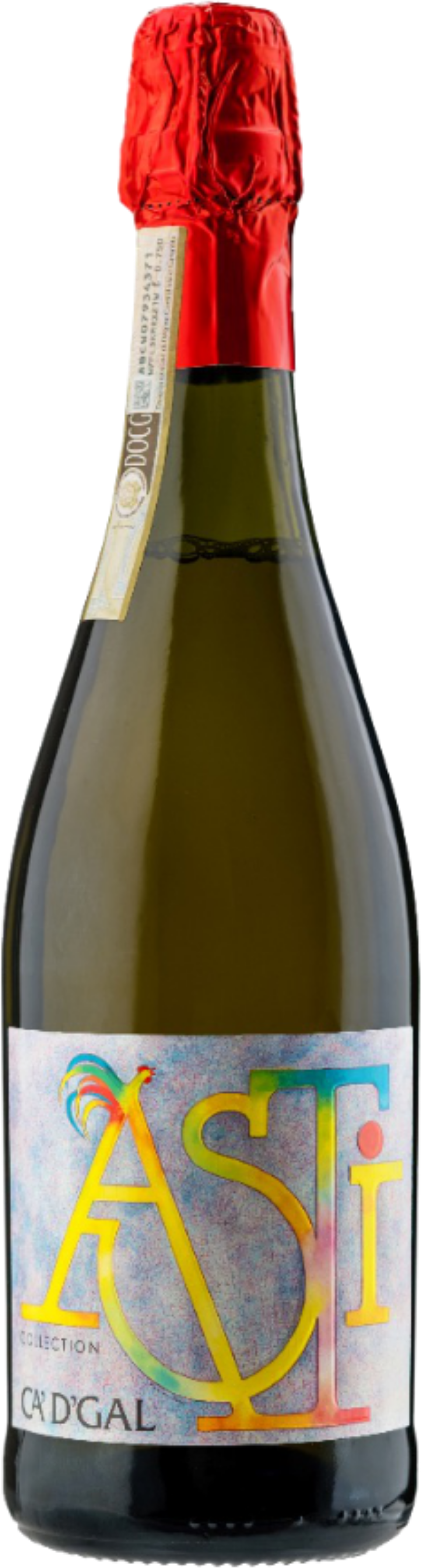
Ca' d' Gal Asti Spumante 'Collection 60 Mesi' Ca' d'Gal 2018The Asti Spumante 'Collection 60 Months' by Ca' d'Gal is the emblem of the great sparkling wine tradition of Piedmont in creating refined dessert wines with Moscato Bianco grapes. Thanks to the use of the Martinotti or Charmat Method, the sparkling wine retains all the scents and aromas of an aromatic grape like Moscato Bianco, an ancient vine present in many regions of Europe, which has found its promised land in the province of Cuneo. Its aromas of orange blossom, citrus, white peach, its harmonious, fresh, and savory sip, accompanied by a creamy and soft perlage, make it an ideal companion for all leavened desserts, particularly: Panettone, Pandoro, and Colomba.The Asti Spumante 'Collection 60 Months' by Ca' d'Gal is produced with Moscato Bianco, grown in the estate located in Santo Stefano Belbo, in the Valdivilla area. This wonderful hilly area of Cuneo features gentle south-facing slopes on sandy soils, which naturally limit production and yield grapes with refined and elegant aromas. The manual harvest usually takes place around the beginning of September, and the grapes are vinified in white with soft pressing and subsequent fermentation in stainless steel tanks. The base wines, after a brief aging, are made to referment in autoclave according to the Martinotti or Charmat Method. A process that allows for the preservation of the rich array of primary aromas characteristic of Moscato Bianco. It then ages for 60 months in the cellar.The Asti Spumante 'Collection 60 Months' produced by the Piedmontese winery Ca' d'Gal genuinely and straightforwardly returns the true taste of the Moscato grape, in its most sincere and vital varietal expression. A wine with an ancient taste, which brings us back to the best traditions of the Monferrato area. In the glass, it presents a beautiful light straw color with subtle greenish reflections. The foam is fine, soft, and persistent. The aromatic profile opens with delicate scents of orange blossom and white flowers, citrus aromas, apple, and yellow peach, with hints of herbal notes. The attack on the palate is of balanced freshness, with juicy fruit that accompanies the sip towards a harmonious, slightly savory finish.39,00 £*Shipping: 48,00 £Secure redirect to the provider
-
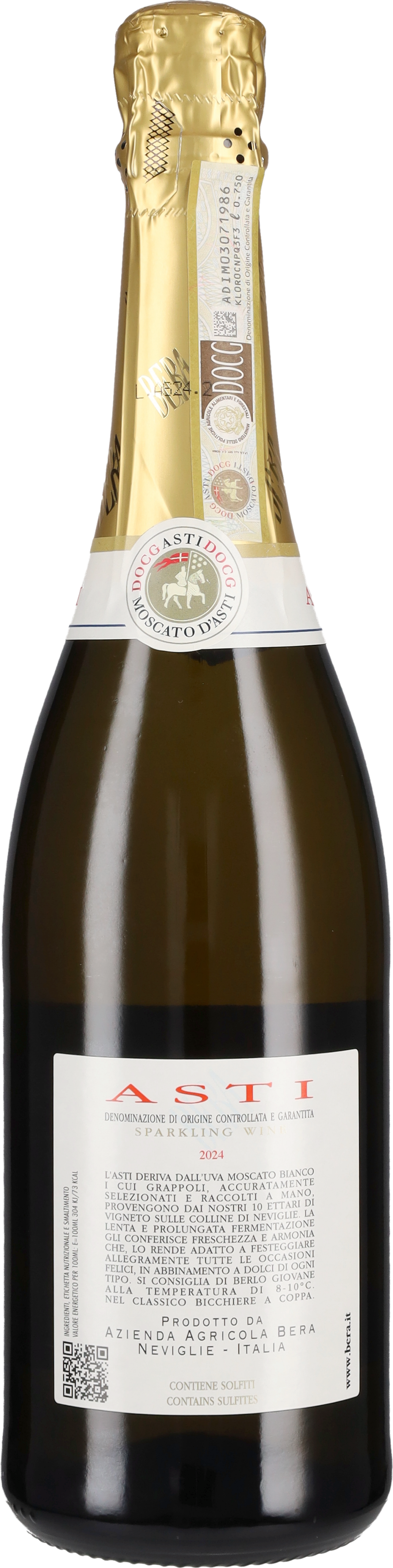
Bera Valter Asti Spumante Valter Bera 2025Questo Asti Spumante di Valter Bera è il vino della festa, il prodotto che va sempre bene in tutte le occasioni dove il brindisi è protagonista. Si tratta di una bottiglia dal perlage ricco e continuo, dove la spuma persistente è preludio di una beva fresca e appagante, in cui il gusto dolce viene sapientemente gestito dalla cantina Valter Bera grazie a una piacevole freschezza che contribuisce all’armonia generale. Un’etichetta dove i profumi al naso richiamano una forte componente aromatica, che caratterizza sempre le uve di Moscato. L’Asti Spumanti di Valter Bera prende vita da un vitigno che, in Piemonte, ha una notevole importanza per la produzione di vini dolci, il Moscato Bianco. I vigneti in cui cresce questa varietà sono caratterizzati da un sottosuolo argilloso-tufaceo, ricco di componenti calcaree, e sono esposti verso sud e sud-ovest. I grappoli, raccolti manualmente durante la vendemmia, vengono diraspati, e gli acini vengono pressati. Il mosto fermenta quindi una prima volta in contenitori d’acciaio, per poi rifermentare, seguendo i principi tipici di produzione del Metodo Martinotti o Charmat, in autoclavi. Al termine della vinificazione si procede con le operazioni di imbottigliamento e commercializzazione. Questo Asti Spumante si annuncia nel bicchiere con un colore tipicamente paglierino, attraversato da un perlage vivace e sbarazzino, con una spuma molto sottile. Lo spettro olfattivo risulta organizzato intorno a note floreali e ad aromi più dolci, da cui emergono sfumature di vaniglia, lieviti e pasticceria. All’assaggio è di corpo leggero, con un sorso dolce che non risulta mai stucchevole, caratterizzato da un’impronta sapida e fruttata, decisamente fresca e invitante alla beva. Un prodotto firmato dalla cantina Valter Bera ideale per accompagnare dessert e aperitivi informali.13,00 £*Shipping: 48,00 £Secure redirect to the provider
-
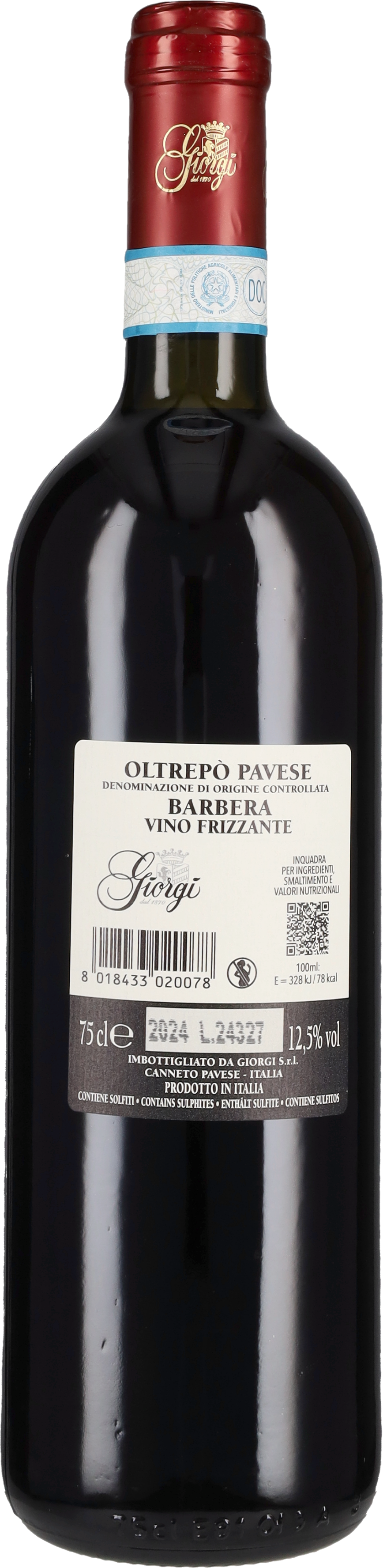
Barbera Frizzante GiorgiThe Barbera Frizzante offered by the Giorgi winery represents one of the most popular and traditional wines of the Oltrepò Pavese lands. The grape variety marks the territorial continuity between the Monferrato area and this corner of Lombardy, which has been dedicated to viticulture for centuries. Barbera, in fact, has spread from the hilly areas of Piemonte eastward into the Oltrepò Pavese and Piacentino regions, becoming one of the most important and identity-defining red grape varieties. The Pavia tradition has always favored a sparkling version of Barbera, which enhances its fruity fragrance and immediate pleasantness. It is a lively and cheerful wine, simple and young, ideal for tasting during convivial moments with a platter of local cured meats. The red Barbera Frizzante from Giorgi is born in the Canneto Pavese area, where this historic family estate manages a large estate of about 60 hectares. The vineyards are located in a hilly area and enjoy a mild and ventilated microclimate, allowing for excellent ripening. The soils are very suitable and consist of calcareous-clay marls, very suitable especially for red grape varieties. Among the rows, there is space mainly for the classic grape varieties of Oltrepò Pavese: Croatina, Barbera, Uva Rara Vespolina, and the international Pinot Nero and Chardonnay, which have adapted very well to this area. The harvest is carried out manually around mid-September, and the Barbera grapes are destemmed and sent for fermentation at a controlled temperature of 28-30 °C with skin maceration. This is followed by the prise de mousse, refermentation in autoclave, and a 6-month aging period in steel before bottling. The Barbera Frizzante wine from Giorgi perfectly follows the style of the local wines, often vinified with a lively effervescence, which makes its profile more joyful. In the glass, it presents a deep ruby red color with youthful purple reflections. The bouquet is rich and exuberant with a light effervescence that enhances the floral aromas of violet, the scents of small dark berries, ripe red plum, cherry, and light spicy sensations. The entry on the palate is fragrant and juicy, with ripe fruit and a savory and very fresh finish.9,00 £*Shipping: 48,00 £Secure redirect to the provider
-
What is the difference between D-glucose and L-glucose?
D-glucose and L-glucose are both isomers of glucose, meaning they have the same chemical formula but different spatial arrangements of their atoms. The main difference between the two is the orientation of the hydroxyl group on the chiral carbon farthest from the carbonyl group. In D-glucose, the hydroxyl group is on the right side, while in L-glucose, it is on the left side. This difference in orientation gives the two isomers distinct properties and biological functions. **
-
How can the formula be rearranged for l and d?
To rearrange the formula for l and d, we can isolate each variable on one side of the equation. For example, to solve for l, we can divide both sides of the equation by w to get l = V / w. Similarly, to solve for d, we can divide both sides by l to get d = V / l. By rearranging the formula in this way, we can easily calculate the values of l and d based on the given volume and width. **
-
Are glucose and glucose the D-glucose and L-glucose themselves?
No, glucose and L-glucose are not the same. Glucose refers to the simple sugar molecule that is commonly found in foods and used by the body for energy. D-glucose and L-glucose, on the other hand, refer to specific forms of glucose that differ in their molecular arrangement. D-glucose is the natural form of glucose found in the body and in foods, while L-glucose is a rare form that is not commonly found in nature. **
-
What is the difference between L-tartaric acid and D-tartaric acid?
L-tartaric acid and D-tartaric acid are mirror-image isomers of each other, known as enantiomers. The main difference between them is their spatial arrangement of atoms. L-tartaric acid has a left-handed configuration, while D-tartaric acid has a right-handed configuration. This difference in configuration gives them different properties, such as their ability to rotate plane-polarized light in opposite directions. Despite their differences, they have similar chemical and physical properties. **

Can you store opened Asti in the refrigerator?
Yes, you can store opened Asti in the refrigerator. It is recommended to reseal the bottle tightly with a cork or stopper to help preserve the carbonation. Keeping it chilled in the refrigerator will also help maintain its freshness and flavors for a longer period of time. Just make sure to consume it within a few days to enjoy it at its best. **
Do D/D/D monsters count as D/D monsters?
Yes, D/D/D monsters do count as D/D monsters. D/D/D monsters are a subgroup within the larger D/D archetype, so they share the same naming convention and are considered part of the D/D family. This means that cards or effects that specifically refer to D/D monsters would also apply to D/D/D monsters. **
Top-Angebote
Products related to Barbera-d-Asti-L:
-
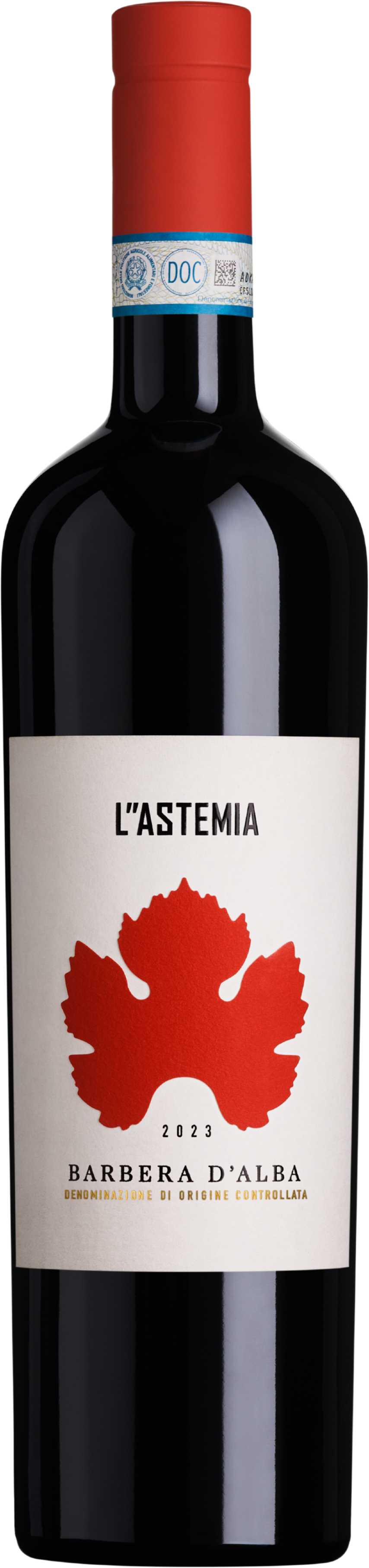
Barbera d'Alba L''Astemia 2023The Barbera d’Alba from L’Astemia is born in a reality of the Langhe with an unconventional character, founded by Sandra Vezza and built around an idea of wine that combines tradition and design. Between Barolo and Monforte d’Alba, the Barbera vineyards extend over hills where this grape variety, considered the queen of the Langhe, finds an authentic and direct expression. The vinification of Barbera d’Alba from L’Astemia involves a maceration on the skins of about 18 days, followed by fermentation and aging exclusively in steel for about 6 months. This choice enhances the purity of the fruit and the juiciest component of the grape variety, maintaining a clear and immediate profile without wood intervention.The Barbera d’Alba by L’Astemia presents a bouquet rich in red and black fruits, with notes of cherry, blackberry, and light balsamic and spicy nuances. The taste is full and enveloping, supported by a lively freshness and a balanced structure that prolongs the drinking experience. It pairs naturally with agnolotti del plin in roast sauce.16,00 £*Shipping: 48,00 £Secure redirect to the provider
-
Ca' d' Gal Asti Spumante 'Collection 60 Mesi' Ca' d'Gal 2018The Asti Spumante 'Collection 60 Months' by Ca' d'Gal is the emblem of the great sparkling wine tradition of Piedmont in creating refined dessert wines with Moscato Bianco grapes. Thanks to the use of the Martinotti or Charmat Method, the sparkling wine retains all the scents and aromas of an aromatic grape like Moscato Bianco, an ancient vine present in many regions of Europe, which has found its promised land in the province of Cuneo. Its aromas of orange blossom, citrus, white peach, its harmonious, fresh, and savory sip, accompanied by a creamy and soft perlage, make it an ideal companion for all leavened desserts, particularly: Panettone, Pandoro, and Colomba.The Asti Spumante 'Collection 60 Months' by Ca' d'Gal is produced with Moscato Bianco, grown in the estate located in Santo Stefano Belbo, in the Valdivilla area. This wonderful hilly area of Cuneo features gentle south-facing slopes on sandy soils, which naturally limit production and yield grapes with refined and elegant aromas. The manual harvest usually takes place around the beginning of September, and the grapes are vinified in white with soft pressing and subsequent fermentation in stainless steel tanks. The base wines, after a brief aging, are made to referment in autoclave according to the Martinotti or Charmat Method. A process that allows for the preservation of the rich array of primary aromas characteristic of Moscato Bianco. It then ages for 60 months in the cellar.The Asti Spumante 'Collection 60 Months' produced by the Piedmontese winery Ca' d'Gal genuinely and straightforwardly returns the true taste of the Moscato grape, in its most sincere and vital varietal expression. A wine with an ancient taste, which brings us back to the best traditions of the Monferrato area. In the glass, it presents a beautiful light straw color with subtle greenish reflections. The foam is fine, soft, and persistent. The aromatic profile opens with delicate scents of orange blossom and white flowers, citrus aromas, apple, and yellow peach, with hints of herbal notes. The attack on the palate is of balanced freshness, with juicy fruit that accompanies the sip towards a harmonious, slightly savory finish.39,00 £*Shipping: 48,00 £Secure redirect to the provider
-
Bera Valter Asti Spumante Valter Bera 2025Questo Asti Spumante di Valter Bera è il vino della festa, il prodotto che va sempre bene in tutte le occasioni dove il brindisi è protagonista. Si tratta di una bottiglia dal perlage ricco e continuo, dove la spuma persistente è preludio di una beva fresca e appagante, in cui il gusto dolce viene sapientemente gestito dalla cantina Valter Bera grazie a una piacevole freschezza che contribuisce all’armonia generale. Un’etichetta dove i profumi al naso richiamano una forte componente aromatica, che caratterizza sempre le uve di Moscato. L’Asti Spumanti di Valter Bera prende vita da un vitigno che, in Piemonte, ha una notevole importanza per la produzione di vini dolci, il Moscato Bianco. I vigneti in cui cresce questa varietà sono caratterizzati da un sottosuolo argilloso-tufaceo, ricco di componenti calcaree, e sono esposti verso sud e sud-ovest. I grappoli, raccolti manualmente durante la vendemmia, vengono diraspati, e gli acini vengono pressati. Il mosto fermenta quindi una prima volta in contenitori d’acciaio, per poi rifermentare, seguendo i principi tipici di produzione del Metodo Martinotti o Charmat, in autoclavi. Al termine della vinificazione si procede con le operazioni di imbottigliamento e commercializzazione. Questo Asti Spumante si annuncia nel bicchiere con un colore tipicamente paglierino, attraversato da un perlage vivace e sbarazzino, con una spuma molto sottile. Lo spettro olfattivo risulta organizzato intorno a note floreali e ad aromi più dolci, da cui emergono sfumature di vaniglia, lieviti e pasticceria. All’assaggio è di corpo leggero, con un sorso dolce che non risulta mai stucchevole, caratterizzato da un’impronta sapida e fruttata, decisamente fresca e invitante alla beva. Un prodotto firmato dalla cantina Valter Bera ideale per accompagnare dessert e aperitivi informali.13,00 £*Shipping: 48,00 £Secure redirect to the provider
-
Why doesn't glycine have D- and L-forms?
Glycine does not have D- and L-forms because it is the simplest amino acid and has a hydrogen atom as its side chain. Unlike other amino acids that have a chiral carbon atom in their side chains, glycine's side chain is not chiral, meaning it does not have a mirror image form. As a result, glycine does not have D- and L-forms like other amino acids. **
-
'At what age is Asti?'
Asti is 25 years old. **
-
What is the difference between D-glucose and L-glucose?
D-glucose and L-glucose are both isomers of glucose, meaning they have the same chemical formula but different spatial arrangements of their atoms. The main difference between the two is the orientation of the hydroxyl group on the chiral carbon farthest from the carbonyl group. In D-glucose, the hydroxyl group is on the right side, while in L-glucose, it is on the left side. This difference in orientation gives the two isomers distinct properties and biological functions. **
-
How can the formula be rearranged for l and d?
To rearrange the formula for l and d, we can isolate each variable on one side of the equation. For example, to solve for l, we can divide both sides of the equation by w to get l = V / w. Similarly, to solve for d, we can divide both sides by l to get d = V / l. By rearranging the formula in this way, we can easily calculate the values of l and d based on the given volume and width. **
Similar search terms for Barbera-d-Asti-L
-
Barbera Frizzante GiorgiThe Barbera Frizzante offered by the Giorgi winery represents one of the most popular and traditional wines of the Oltrepò Pavese lands. The grape variety marks the territorial continuity between the Monferrato area and this corner of Lombardy, which has been dedicated to viticulture for centuries. Barbera, in fact, has spread from the hilly areas of Piemonte eastward into the Oltrepò Pavese and Piacentino regions, becoming one of the most important and identity-defining red grape varieties. The Pavia tradition has always favored a sparkling version of Barbera, which enhances its fruity fragrance and immediate pleasantness. It is a lively and cheerful wine, simple and young, ideal for tasting during convivial moments with a platter of local cured meats. The red Barbera Frizzante from Giorgi is born in the Canneto Pavese area, where this historic family estate manages a large estate of about 60 hectares. The vineyards are located in a hilly area and enjoy a mild and ventilated microclimate, allowing for excellent ripening. The soils are very suitable and consist of calcareous-clay marls, very suitable especially for red grape varieties. Among the rows, there is space mainly for the classic grape varieties of Oltrepò Pavese: Croatina, Barbera, Uva Rara Vespolina, and the international Pinot Nero and Chardonnay, which have adapted very well to this area. The harvest is carried out manually around mid-September, and the Barbera grapes are destemmed and sent for fermentation at a controlled temperature of 28-30 °C with skin maceration. This is followed by the prise de mousse, refermentation in autoclave, and a 6-month aging period in steel before bottling. The Barbera Frizzante wine from Giorgi perfectly follows the style of the local wines, often vinified with a lively effervescence, which makes its profile more joyful. In the glass, it presents a deep ruby red color with youthful purple reflections. The bouquet is rich and exuberant with a light effervescence that enhances the floral aromas of violet, the scents of small dark berries, ripe red plum, cherry, and light spicy sensations. The entry on the palate is fragrant and juicy, with ripe fruit and a savory and very fresh finish.9,00 £*Shipping: 48,00 £Secure redirect to the provider
-
Shoekeeper Men's Shoe Stretcher & Spray - L Other Footwear Accessories*Expand your shoes to the perfect fit. Shoe stretch spray softens leather. Screw-driven shoe stretcher expands leather to eliminate pinching. Metal plugs included for spot stretching. Kit includes one stretcher and one bottle of 4 oz. spray. Sizes:....43,96 $*Shipping: 6,95 $Secure redirect to the provider
-
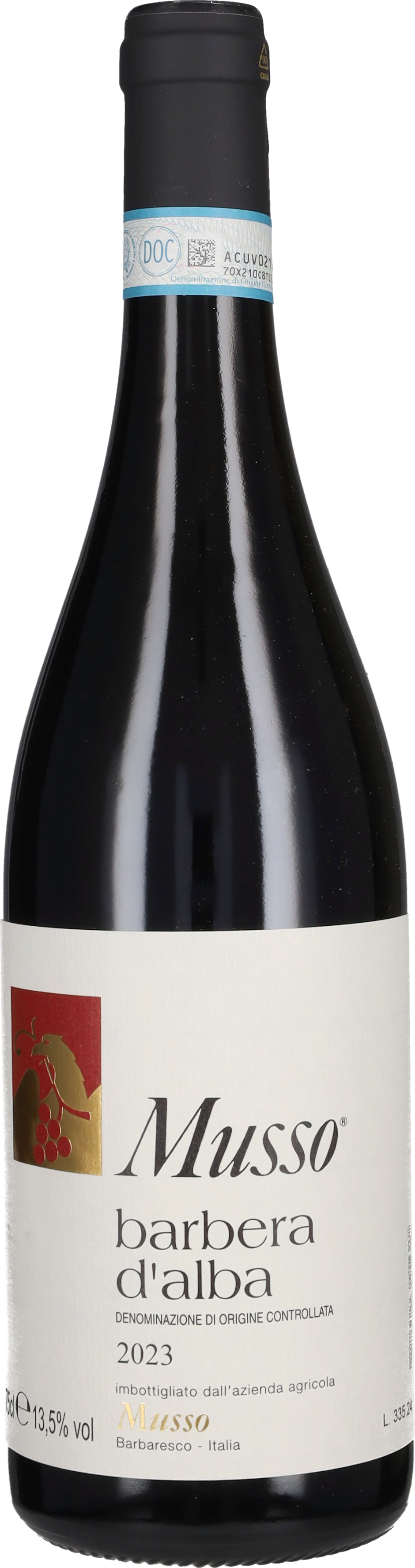
Barbera d'Alba Musso 2023The Barbera d'Alba from the Piedmontese producer Musso is a bottle with a lively and fruity taste, typical characteristics of this black grape variety. The estate, located within the municipality of Barbaresco, manages just over 10 hectares of vineyards reserved for the traditional varieties of Lower Piedmont, namely Nebbiolo, Barbera, Dolcetto, Freisa, and Arneis. All processing operations take place in the winery owned by the Musso family, today represented by Valter, his son Emanuele, who assists him in commercial and communication matters, and his nephew Luca Accornero, who along with Valter takes care of the management of the vineyards. Musso Barbera d'Alba originates from only Barbera grapes grown between 240 and 270 meters above sea level. The vines, exposed to the southwest, rest on predominantly limestone soils characterized by frequent clay interferences, which give greater thickness to the soil. The grapes are hand-picked and then destemmed and crushed, with the must thus obtained fermenting in contact with the skins, for part of the mass in tanks of stainless steel and for the remaining part in 500-liter oak tonneau. Once the fermentation processes are completed, the two masses are blended for aging of about 12 months first in tonneau and subsequently in large barrels of 20 hectoliters, followed by an additional year of refinement in bottle before being released on the market. The color of Musso's Barbera d'Alba is intense garnet red with ruby reflections. The nose unfolds with ethereal and intensely fruity aromas of cherry in spirits and berries, enriched by toasted and spiced notes of cinnamon and vanilla. Intense and enveloping sip, well balanced by lively freshness and smooth tannin.19,00 £*Shipping: 48,00 £Secure redirect to the provider
-
Are glucose and glucose the D-glucose and L-glucose themselves?
No, glucose and L-glucose are not the same. Glucose refers to the simple sugar molecule that is commonly found in foods and used by the body for energy. D-glucose and L-glucose, on the other hand, refer to specific forms of glucose that differ in their molecular arrangement. D-glucose is the natural form of glucose found in the body and in foods, while L-glucose is a rare form that is not commonly found in nature. **
-
What is the difference between L-tartaric acid and D-tartaric acid?
L-tartaric acid and D-tartaric acid are mirror-image isomers of each other, known as enantiomers. The main difference between them is their spatial arrangement of atoms. L-tartaric acid has a left-handed configuration, while D-tartaric acid has a right-handed configuration. This difference in configuration gives them different properties, such as their ability to rotate plane-polarized light in opposite directions. Despite their differences, they have similar chemical and physical properties. **
-
Can you store opened Asti in the refrigerator?
Yes, you can store opened Asti in the refrigerator. It is recommended to reseal the bottle tightly with a cork or stopper to help preserve the carbonation. Keeping it chilled in the refrigerator will also help maintain its freshness and flavors for a longer period of time. Just make sure to consume it within a few days to enjoy it at its best. **
-
Do D/D/D monsters count as D/D monsters?
Yes, D/D/D monsters do count as D/D monsters. D/D/D monsters are a subgroup within the larger D/D archetype, so they share the same naming convention and are considered part of the D/D family. This means that cards or effects that specifically refer to D/D monsters would also apply to D/D/D monsters. **
* All prices are inclusive of VAT and, if applicable, plus shipping costs. The offer information is based on the details provided by the respective shop and is updated through automated processes. Real-time updates do not occur, so deviations can occur in individual cases. ** Note: Parts of this content were created by AI.